
[ad_1]
WEDUSEA is a pioneering collaboration between 14 partners (including private companies, universities and research institutions) from the United Kingdom, Ireland, France, Germany and Spaincoordinated by the Irish company OceanEnergy and co-financed by the European program Horizon Europe and Innovate UK, the UK’s innovation agency. The total investment amounts to 19.6 million euros and aims to implement the technology of exploitation of wave motion for energy supply purposes, thanks to the OE35, the largest floating device in the world, designed by OceanEnergy.
The four-year WEDUSEA project has three phases. The first becomes concrete in the initial design of a device suitable for the ocean conditions of the European Marine Energy test site and will be followed by the demonstration at the site, lasting two years. The final step will focus on marketing and dissemination of the results obtained.
During the Conference, the details on the project will be announced: it will in fact be presented OE35, a 1 MW floating wave energy converter, connected to the grid at the European Marine Energy Center test site in Orkney, Scotland.
OceanEnergy Chief Technical Officer Prof Tony Lewis said: “This rigorous technical and environmental demonstration will last two years exploiting the Atlantic wave motion. We believe this will represent a transformation for the wave energy industry, with results that will have a direct impact on policies, technical standards, perception public and investor confidence. Wave energy is the world’s most valuable and persistent renewable resource. However, it has yet to be fully realized. The project will demonstrate that wave technology is on a cost-cutting trajectory and will therefore be a springboard for wider scalability of commercial arrays and further industrialization. We anticipate that the natural energy of the world’s oceans will someday provide much of the grid. “.
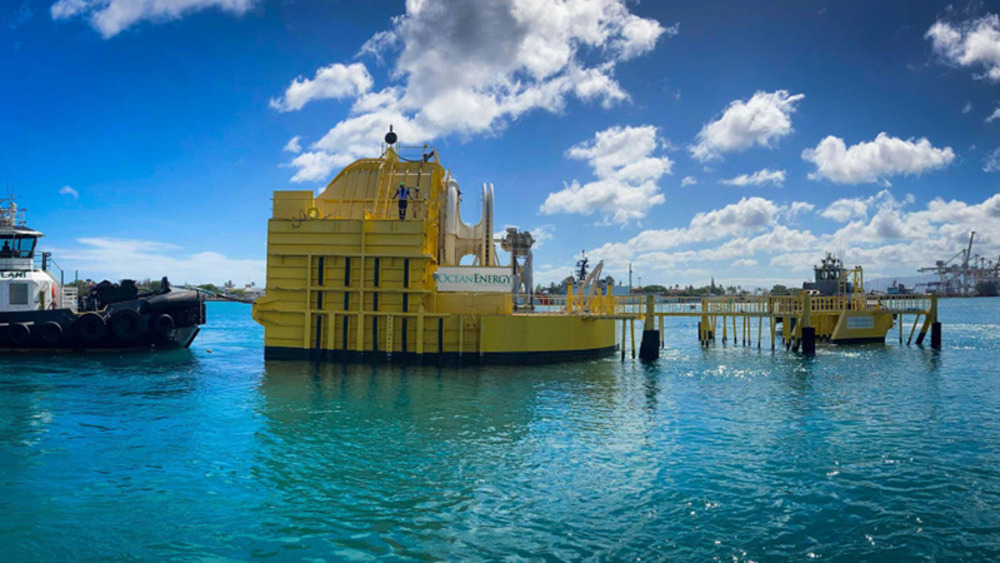
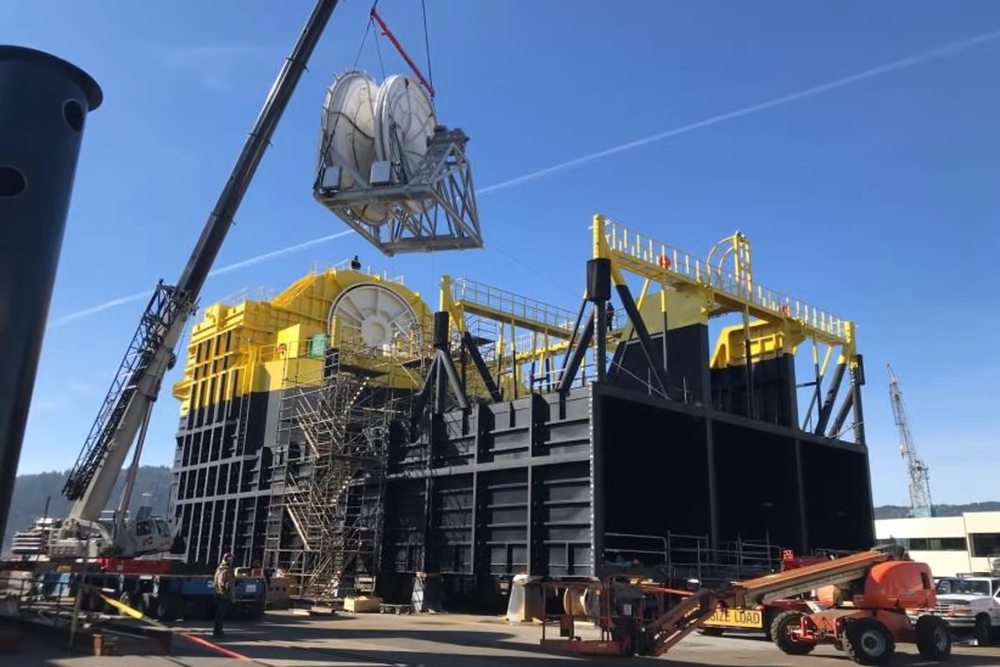
The device is open at the bottom and this allows it to trap air bubbles which, thanks to the pressure exerted by the waves, are pushed through a turbine, generating electricity. This can be used both locally (for the production of energy for offshore activities), and distributed to the onshore grid.
Matthijs Soede, from the European Commission, later added: “We expect that WEDUSEA will take wave energy beyond the state of the art thanks to the collaboration of partners with a multidisciplinary background will contribute to the implementation of systems with reliable devices to obtain energy from the waves and thus achieve the 1 GW goal. for 2030 as presented in our offshore renewable energy strategy. The current energy crisis shows that the use of multiple energy sources is important to improve security of supply and a breakthrough in ocean energy would be welcome. “.
OceanEnergy and other consortium companies will actively leverage the results through new innovations, products and services. The results will also be disseminated to feed both environmental databases and IEC electrotechnical standards.
For more details and to know the actors who took part in the project, you can click this link.
.
[ad_2]
Source link
