
[ad_1]
What are non-fungible tokens (NFTs)? It seems like a simple question that should have a simple answer. As we outlined in our guide, an NFT is a unique unit of data on a blockchain that can be linked to objects to provide proof of ownership.
But that’s just the literal definition of the technology. To really understand NFTs and what they really mean, we need to go beyond that. We need to understand how they are valued and used.
The two most common answers when discussing the value and use of NFTs are as follows: 1) NFTs are digital assets that let creators (finally) retain control of their IP and earn a living from their work. 2) NFTs are investment vehicles.
However, neither of the aforementioned quite hit the mark. Again, it’s just not that simple.
The fact of the matter is that the NFT community has become more than a group of artists and collectors. The space can be considered a true subculture, and this subculture is having far-reaching effects that extend across the intersection of art, tech, gaming, finance, fashion, and more.
In short, to truly understand NFTs, we need to understand this subculture and how they are valued and used by individuals who participate in it. Here, we cover how this subculture formed, the values its participants share, and the way they use NFTs.
Ready? Let’s dive in.
Creating a culture: The early days
Although non-fungible tokens have existed (in one form or another) since the 2010s, it wasn’t until 2020 — three years after CryptoPunks burst onto the scene — that NFTs became a prominent facet of the blockchain ecosystem.
Around this time, the possibilities presented by non-fungibility via NFTs started to excite many. People realized that if NFTs were tied to a piece of digital art — a song, poem, image, event ticket, etc. — they could be bought and sold like cryptocurrencies. In other words, with NFTs, digital items can be transformed into collectibles that live on the blockchain, allowing individuals to truly own digital items for the first time in history.
Interest in crypto art swelled as a result, and many crypto-artists started gaining a following and began to make a sustainable living off of their art for the first time in their lives.
In this early stage, the NFT space didn’t yet feel like an investing group. No one was in it for day trading. This community, built around blockchain technology, was a niche internet subculture where people traded art, memes, humor, and created their own slang.
However, things were rapidly changing.
A distraction: The market boom
The COVID pandemic bolstered the crypto market over the course of 2020. This increase in the market helped many investors accrue major profits, and interest in blockchain technologies ballooned in response. The NFT space started to feel the effects as 2021 rolled around.
One of the most notable events of this time was Beeple’s $6 million CROSSROAD sale, which helped drive serious interest and traffic to the NFT marketplace Nifty Gateway for the first time. This, in turn, proliferated outward to other NFT marketplaces and even social media platforms, as everyone started clamoring for a piece of the pie.
As NFTs gained mainstream attention, scams flourished and PFP projects saturated the market, disheartening many who had found community in the space in the years prior to the market boom.
However, don’t confuse the boom with the actual subculture that exists beneath it. By turning from the massive sales figures and famous names, by looking at the NFT community itself — the people who comprise it and their shared beliefs — we can begin to truly understand NFTs.
Alotta Money: a microcosm of the NFT space
The legacy of pioneering crypto artist Alotta Money, in particular, serves as a microcosm of the meaning of NFTs to those who are active participants in the community.
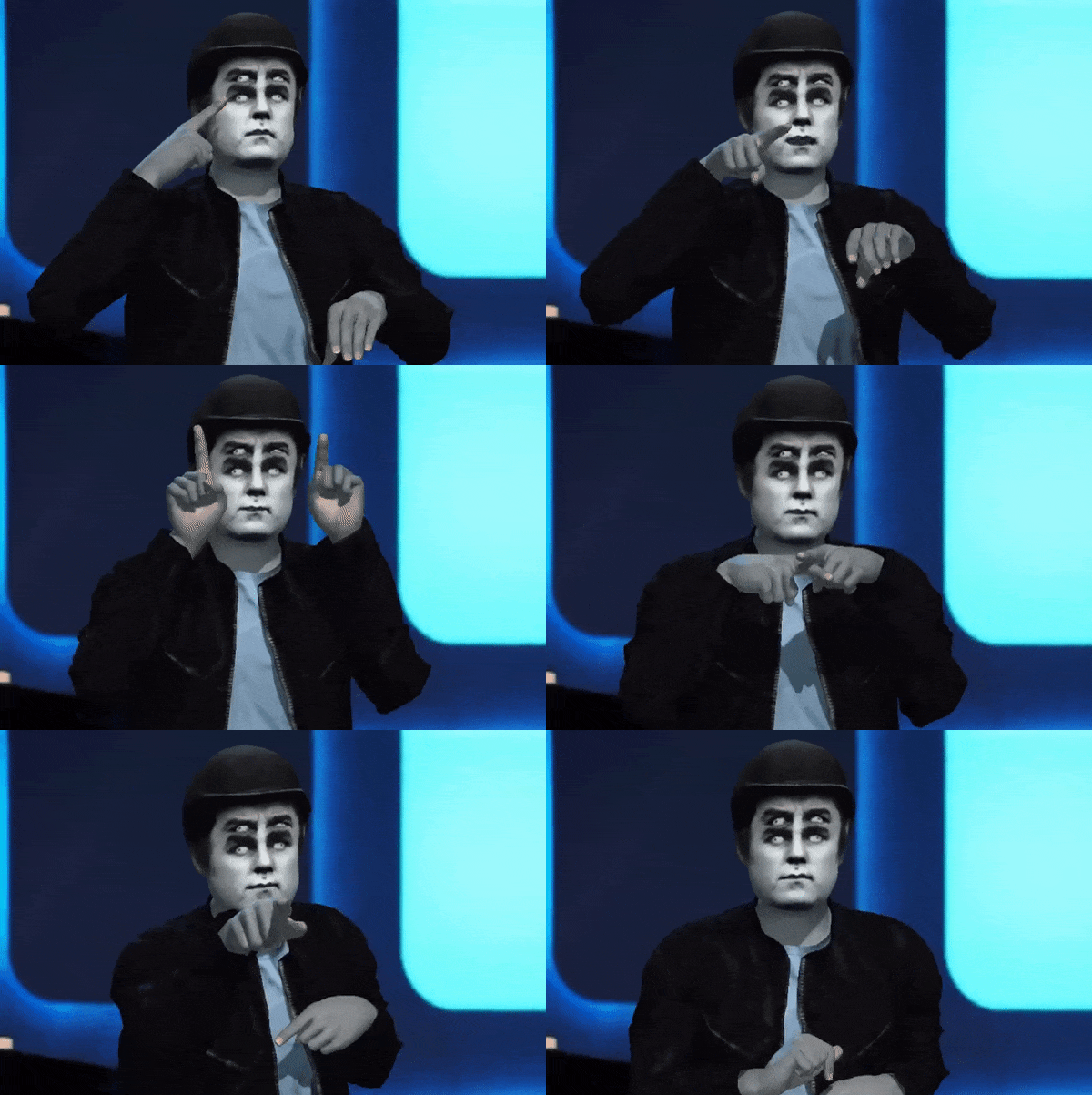
Widely celebrated for his signature collage-styled works and popular four-eyed character, Alotta Money was considered a top-tier crypto artist — with his pieces frequently traded on Nifty Gateway long before Beeple and Pak helped transform NFTs into a cultural phenomenon. When large-scale PFP projects began flooding the market, Alotta Money creations like “Saint Nakamoto” and “ETH Boy” served as a testament to the value of 1/1 crypto-art pieces.
When reports first came in that the influential French creator had passed away in March of 2022, only days before his 50th birthday, an outpouring of grief was felt to the furthest corners of the Web3 space.
Alotta Money was an artistic trailblazer, a crucial member of the original crypto-art community, and beloved by many. He was someone who seemed to understand the true meaning of NFTs. To commemorate him, the NFT space would do well to remember the friendship and sense of togetherness that first inspired many to start affectionately swapping acronymous niceties like “GM” and “WAGMI” in the first place.
While many undoubtedly came into this space for the art or the profits, they have stayed for the people, the culture, and the shared values.
The true meaning of NFTs
After war broke out in Ukraine, members of the Web3 community banded together in record time. In a few short days, they raised millions to support victims of a war that (in many cases) was halfway around the world.
Even before the Ukrainian humanitarian crisis, many people in the NFT space were attempting to move the needle on the climate debate. Nifty Gateway even went so far as to address blockchain’s potential environmental impact by committing to offset NFT footprints in hopes of creating a net positive climate impact.
Other creators used NFTs as a way to fund tree planting and to raise awareness about other important social issues.
Yes, the NFT community is an incubator for innovation in art, technology, community-building, and philanthropy. Over time, NFTs have fostered a massive, vibrant community centered around more than money or art. The space has become a place where lives can and do change and where people — more often than not — seem to want to look out for each other.
[ad_2]
Source link
